
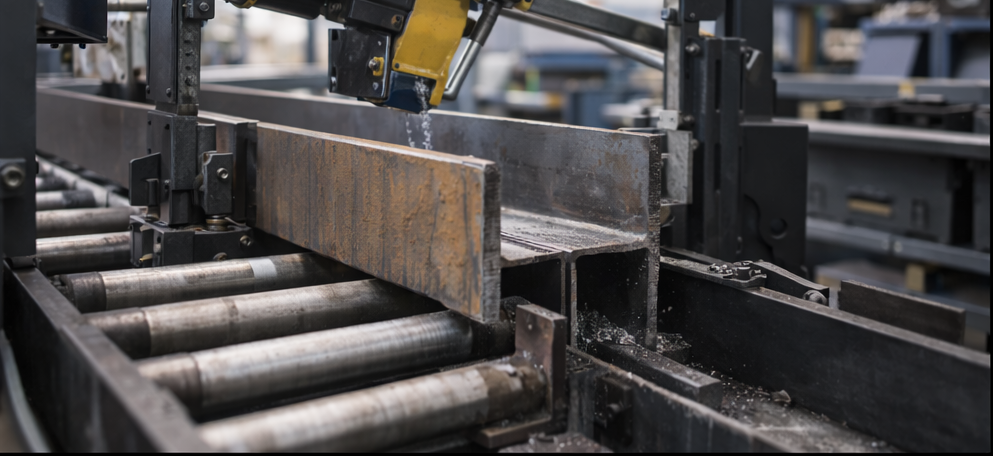
How to Prevent Bandsaw Blade Binding in Structural Steel: Setup and Maintenance Guide
Blade binding in structural steel typically results from five setup issues: incorrect blade tension, wrong cutting speed for the material, excessive feed pressure, inappropriate blade pitch, or poor material clamping. Most workshops discover the problem is setup rather than the machine or blade quality. This guide walks through systematic diagnosis so you can identify and fix the actual cause.
Understanding Why Structural Steel Causes Blade Binding
Structural sections like RSJs, box sections and angle iron challenge bandsaws differently than flat plate. The varying thicknesses within a single cut – thick web transitioning to thin flange – mean the blade encounters constantly changing resistance. If your setup works fine for consistent materials but binds in structural sections, that’s the key diagnostic clue.
True binding occurs when the blade stalls completely under load, often accompanied by a squealing noise before it jams or breaks. This differs from blade wandering (where the cut drifts off line) or simple dulling (slow cutting with burning). Understanding which problem you’re actually experiencing matters, because the fixes are different.
Material hardness also plays a role. In many cases, structural steel varies in hardness across the same section, particularly at welds or in galvanised material where coating thickness changes. This inconsistency can contribute to binding even when your basic setup is correct.
The Five Main Causes of Blade Binding
- Before diving into detailed fixes, check these five areas systematically. It’s common for workshops to discover they’re addressing the wrong cause – for example, replacing blades repeatedly when the actual issue is feed pressure.
- Cutting speed determines how aggressively the teeth engage material. Too fast for structural steel creates excessive heat and pressure. Too slow can cause teeth to rub rather than cut.
- Feed pressure controls how forcefully you push material into the blade. Excessive pressure, particularly common with manual feed machines, overwhelms the blade’s cutting capacity and causes binding.
- Blade pitch (teeth per inch) must match the thinnest section you’re cutting. Wrong pitch means insufficient teeth engaging the material, leading to binding and premature blade failure.
- Material clamping prevents vibration during cutting. Poorly secured structural sections vibrate under cutting forces, which manifests as intermittent binding and poor cut quality.
Checking and Adjusting Blade Tension
Most bandsaw manufacturers provide tension settings for different blade widths, typically via a gauge on the tension adjustment mechanism. However, these gauges can become inaccurate over time. A simple test involves deflecting the blade sideways with moderate finger pressure – it should flex slightly but spring back immediately.
For structural steel cutting, it’s common to require slightly higher tension than for plate cutting, because the varying material thickness creates more lateral forces on the blade. Start with the manufacturer’s recommendation, then increase tension incrementally if binding persists.
Warning signs your tension mechanism itself may be worn include inability to achieve adequate tension even at maximum adjustment, or tension that doesn’t hold during cutting. At that point, you’re looking at machine maintenance rather than simple setup adjustment.
Getting Cutting Speed Right for Structural Sections
Most structural steel cuts well at relatively slow speeds compared to softer materials. In many cases, workshops run their bandsaws too fast because that’s what works for general plate cutting. Structural sections need patience.
Variable speed bandsaws allow you to adjust for different materials. If your machine runs at fixed speed, you’re limited to adjusting feed rate to compensate. Manual feed machines give you complete control; automatic feed machines may require speed reduction for structural work.
The correct speed produces a steady stream of fine chips without excessive heat or noise. Too fast creates large chips, heat build-up and binding. Too slow produces dust rather than chips and causes teeth to rub, which also leads to binding.
Managing Feed Pressure and Rate
Excessive feed pressure is perhaps the most common cause of binding, particularly on manual feed machines where operator instinct is to push harder when cutting slows. This creates a vicious cycle – binding slows the cut, operator pushes harder, which worsens the binding.
The correct feed pressure allows the blade to cut at its own pace. You should feel slight resistance but not be forcing material into the blade. On automatic feed machines, reduce the feed rate setting for structural sections compared to what you’d use for flat plate.
Different structural sections require different feed rates even at the same thickness. Box sections and hollow sections generally feed slower than solid sections because the blade cuts through multiple thickness transitions per revolution.
Selecting Appropriate Blade Pitch
Blade pitch selection follows a simple principle: you need at least three teeth engaged in the material at all times. For structural steel, this means choosing pitch based on the thinnest section the blade will encounter, not the thickest.
Variable pitch blades can help with structural sections because they handle the thickness variations better than constant pitch blades. The varying tooth spacing reduces the tendency for all teeth to hit thickness transitions simultaneously, which commonly causes binding.
It’s common for workshops to use too coarse a pitch (too few teeth) thinking this will cut faster. In structural sections, this usually causes binding because insufficient teeth engage the thin flanges and webs.
Material Clamping and Setup
Vibration during cutting frequently causes intermittent binding that confuses diagnosis. The blade binds momentarily as the material vibrates, then cuts freely again, creating an inconsistent problem that’s difficult to troubleshoot.
Structural sections require different clamping approaches than plate. Long sections need support beyond the vice to prevent cantilever flex. Thin-walled sections need careful clamping pressure – too little causes vibration, too much can collapse the section.
When cutting multiple pieces together (bundle cutting), ensure all pieces are firmly clamped together with no gaps between them. Movement between pieces during cutting will cause binding regardless of your other settings.
When Binding Indicates Machine Problems
If you’ve systematically addressed tension, speed, feed and clamping but binding persists, the machine itself may have developed problems. Worn blade guides allow excessive blade deflection. Bearing wear in the drive wheels creates vibration and inconsistent blade speed. Frame misalignment can cause the blade to twist during cutting.
AFM Europe has serviced bandsaws across UK fabrication workshops for over 20 years, and our engineers commonly see these wear patterns in older machines. Our support and servicing team can determine whether you’re looking at a fixable issue or machine end-of-life.”
Sometimes the repair is straightforward; sometimes the machine has simply reached the point where replacement makes more financial sense than continued repairs. If you’re experiencing persistent binding despite correct setup, professional service inspection can determine whether you’re looking at a fixable issue or machine end-of-life.
Solving Blade Binding Systematically
Most bandsaw blade binding in structural steel comes down to setup rather than machine or blade quality. Work through tension, speed, feed pressure, blade pitch and clamping systematically before concluding you have a serious machine problem.
The key is changing one variable at a time and testing the result. Workshops that change multiple settings simultaneously often solve the problem but don’t know which change actually worked, leaving them unable to maintain consistent results.
Experiencing persistent blade binding issues despite correct setup? Contact our team to discuss whether your current machine needs service attention or replacement.