Fabrication Workshop Layout: Flow, Safety and Output
Most fabrication workshops were never designed. They grew. A press brake went where there was space. The welding bay ended up next to the guillotine because that is where the power supply was. Raw material gets stored wherever it fits, and finished parts travel back and forth across the shop floor three times before they reach despatch.
The result is wasted time, blocked gangways, unnecessary crane movements and operators working around each other instead of alongside each other. A better metal fabrication workshop layout can lift output before you buy another machine.
Material Flow: One Direction, Start to Finish
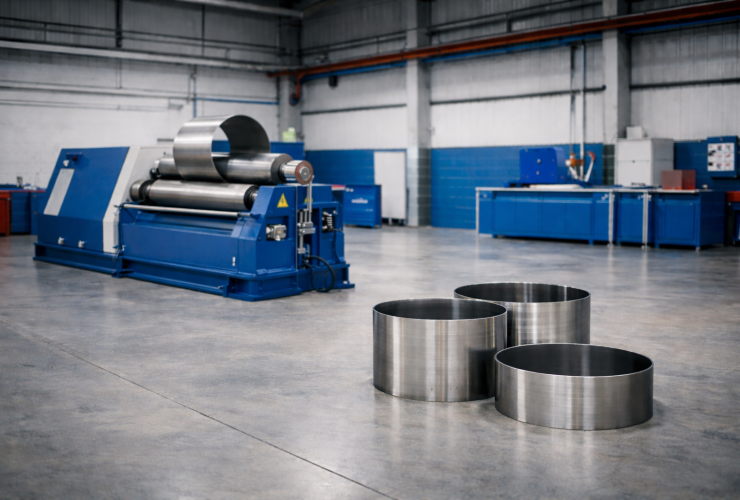
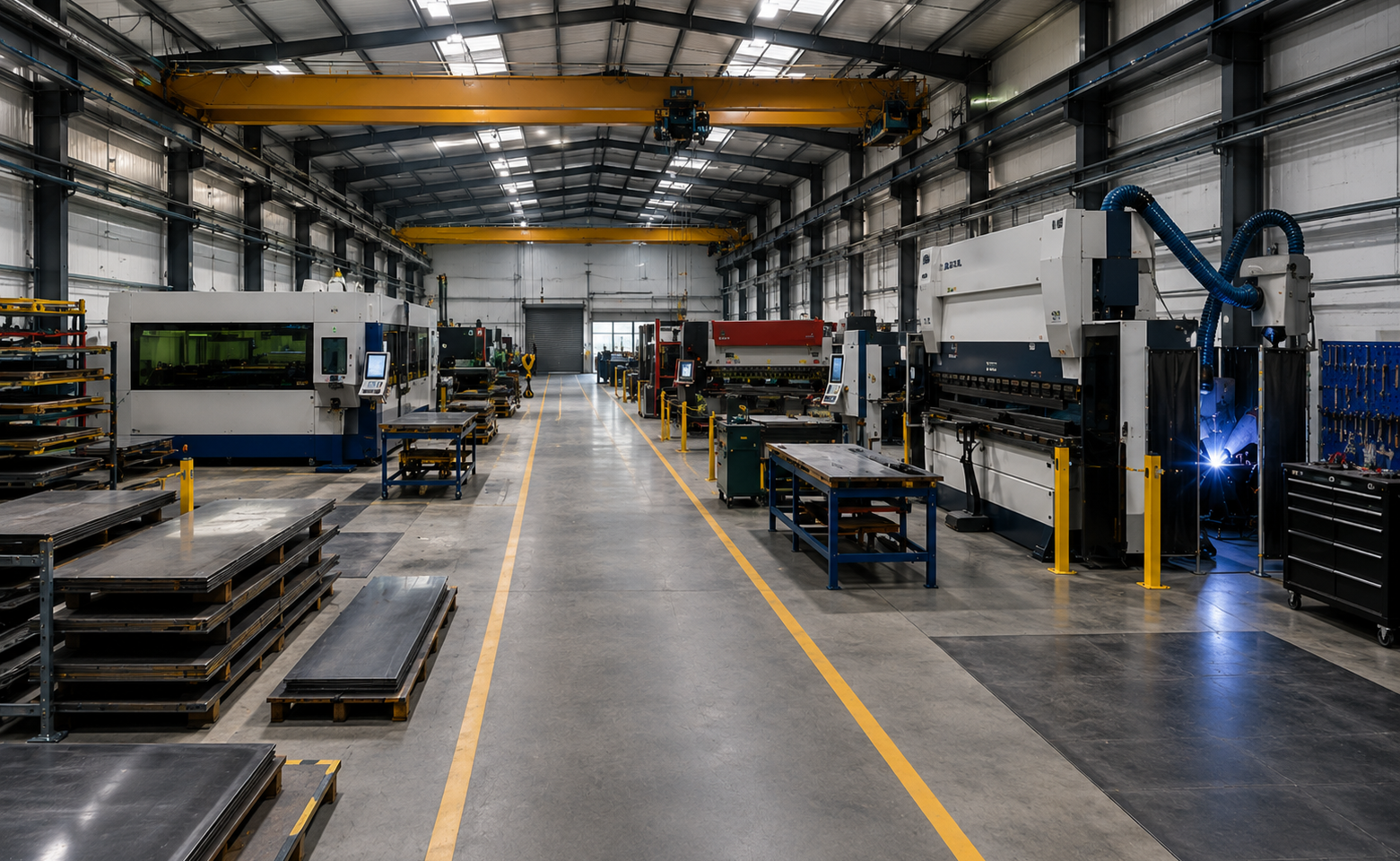
The single biggest improvement most workshops can make is arranging machines so material moves in one direction: raw stock in at one end, finished parts out at the other. A typical sheet metal flow runs: raw material storage → cutting (guillotine, laser, plasma) → forming (press brake, rolls) → welding and assembly → finishing → despatch.
When machines sit in this sequence, parts move forward through the workshop without backtracking. Operators spend less time transporting material and more time producing. Crane movements become shorter and more predictable.
You do not need a perfect line. U-shaped or L-shaped flows work well in rectangular workshops. The principle is the same: material should not cross its own path.
Machine Positioning and Clearances
Every machine needs working space around it. Operators need room to load and unload material, access controls without obstruction and move safely during operation.
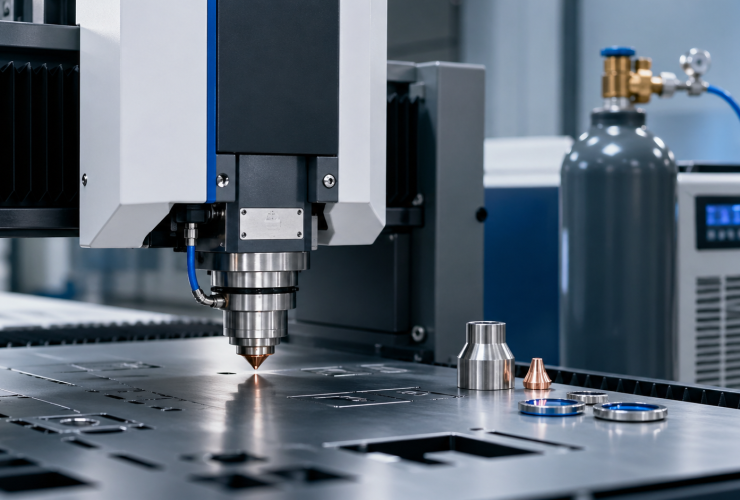
As a practical starting point, press brakes need clear space in front and behind for sheet handling, especially on longer beds where material overhangs. Guillotines need similar front-and-rear clearance plus side access for offcuts. Laser and plasma tables need loading space on at least one side and enough room for a forklift or crane to swap sheet packs.
HSE guidance requires a minimum gangway width of 600mm for pedestrian-only routes, though most working workshops find that 1,000–1,200mm is more realistic once you account for trolleys, pallet trucks and operators carrying stock. Main traffic routes and forklift lanes need to be wider still.
Position machines so their operator stations face away from main traffic routes. This reduces distraction and keeps moving traffic behind guarding rather than behind operators.
Welding Bays and Fume Extraction
Welding bays should sit downstream of cutting and forming but separated from general fabrication by screens or partitions. This contains UV flash, spatter and fume away from other operators.
Local exhaust ventilation (LEV) is a legal requirement under COSHH where welding fume is generated. Position extraction arms or hoods at source, as close to the weld point as practical. Downdraught benches work well for smaller fabrications. For larger assemblies, flexible extraction arms on overhead booms give the best combination of reach and capture.
Plan extraction ducting routes early. Retrofitting LEV into a workshop that was not designed for it typically means exposed ductwork, awkward routing and compromised capture efficiency. If you are fitting out a new space, run the ducting before you position the machines.
Crane Coverage and Lifting Zones
Overhead cranes serve the heaviest handling tasks: loading sheet packs onto cutting tables, moving formed parts to welding and shifting finished assemblies to despatch. Plan crane coverage so it reaches the machines that handle the heaviest materials.
If your crane does not cover the full shop floor, position the machines that need it most within the crane’s travel. Cutting machines and press brakes typically handle the heaviest individual lifts. Welding bays often deal with assembled weight, which may be better served by a jib crane or mobile lifting gear.
Keep crane travel paths clear of permanent obstructions. Racking, mezzanines and overhead ducting all need to sit outside the crane’s sweep.
5S in a Fabrication Workshop
5S (sort, set in order, shine, standardise, sustain) is a simple framework for keeping a workshop organised. In a fabrication context, it means removing tools and stock that do not belong at a workstation, giving every item a marked home, cleaning machines and floors daily, making those standards visible and reviewing them regularly.
The practical benefit is not tidiness for its own sake. A 5S-disciplined workshop reduces time spent searching for tooling, eliminates trip hazards from misplaced stock and makes problems visible before they cause downtime.
Getting the Layout Right Before the Machines Arrive
If you are fitting out a new workshop or reorganising an existing one, the layout conversation should happen before the machinery arrives. AFM’s installation and machinery moves team handles delivery, positioning, commissioning and operator training, so they understand the practical constraints of getting heavy equipment into the right place and keeping it accessible for servicing.
For workshops planning a new build or a significant reorganisation, contact AFM to discuss machinery positioning, installation requirements and how your equipment choices fit the space you have.